cable shielding materials
Cable shielding materials play a critical role in protecting signal integrity and ensuring reliable performance in electrical and electronic systems. They are used to minimize electromagnetic interference (EMI) and radio frequency interference (RFI), both from external sources and from neighboring conductors within the same cable. By reducing noise and crosstalk, shielding helps maintain the quality of data, audio, video, and control signals, especially in environments with high electrical noise.The most common shielding materials are metals with good conductivity and suitable mechanical properties. Copper is widely used because of its excellent electrical conductivity, which allows it to effectively intercept and carry away unwanted electromagnetic energy. It is often applied in the form of braided shields, served (spiral) shields, or foil shields. Braided copper shields provide good coverage and mechanical strength, making them suitable for flexible cables that will be moved or bent frequently. Spiral copper shields offer high flexibility but may provide less uniform coverage and are more suitable for applications where the interference is moderate.Aluminum is another key shielding material, frequently used as a thin foil, sometimes laminated with polyester or other plastics for mechanical support. Aluminum foil shields can achieve very high coverage, often close to 100%, which is beneficial for high-frequency interference protection. However, aluminum has lower conductivity than copper and is less flexible, so it is often combined with a drain wire made of copper to ensure easy termination and grounding.In many cable designs, composite shields are used to combine the strengths of different materials and structures. A common configuration is an aluminum foil shield with an overlaid copper braid. The foil provides excellent high-frequency shielding and complete coverage, while the braid improves low-frequency shielding performance and enhances mechanical robustness. This combination is frequently used in data communication cables, audio and video cables, and industrial control cables.Shielding materials are also selected based on environmental and mechanical requirements. For harsh environments, tinned copper braids or foils resist corrosion better than bare copper. In applications where weight is a concern, such as aerospace or portable electronics, thinner foils and lightweight alloys may be preferred. In addition, some shields are designed to offer not only electrical protection but also physical protection against abrasion or impacts.The choice of shielding material and construction must consider the frequency range of the signals and potential interference, the required flexibility, the installation environment, and ease of termination. Effective shielding depends not only on the material itself but also on proper grounding and cable layout. When chosen and implemented correctly, shielding materials significantly improve system reliability, reduce error rates, and extend the operating range of modern electronic and communication systems.
نتاج
تصنيف:
Cable Aluminum Foil
-

Aluminum foil for Cable shielding AL+PET(Single side blue color small coil)
تصنيفها: Cable Aluminum Foilالمشاهدات: 13عدد:وقت الإصدار: 2026-03-19 15:09:37 -

Aluminum foil for Cable shielding AL+PET(Single side silver color small coil)
تصنيفها: Cable Aluminum Foilالمشاهدات: 9عدد:وقت الإصدار: 2026-03-19 15:17:23 -

PET Polyester film for Cable (Transparent)
تصنيفها: Cable Aluminum Foilالمشاهدات: 22عدد:وقت الإصدار: 2026-03-19 15:25:30 -

PET Spooling Polyester film for Cable
تصنيفها: Cable Aluminum Foilالمشاهدات: 15عدد:وقت الإصدار: 2026-03-19 15:31:14 -

VMPET ,Metalized for flexible duct
تصنيفها: Duct Aluminum Foilالمشاهدات: 18عدد:وقت الإصدار: 2026-03-19 16:01:49 -

Graphene Aluminum foil with orange printing PET+AL+PE
تصنيفها: Packaging Materialsالمشاهدات: 3عدد:وقت الإصدار: 2026-03-19 16:27:58 -
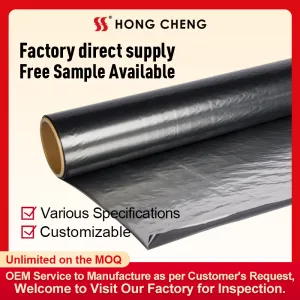
Matte MPET lamiante with PE MatteVMPET+PE
تصنيفها: Thermal Insulation Materialsالمشاهدات: 11عدد:وقت الإصدار: 2026-03-19 17:02:09
أخبار
تصنيف:
لا توجد نتائج بحث!
حالة
تصنيف:
لا توجد نتائج بحث!
فيديو
تصنيف:
لا توجد نتائج بحث!
تحميل
تصنيف:
لا توجد نتائج بحث!
تجنيد
تصنيف:
لا توجد نتائج بحث!
المنتجات الموصى بها
لا توجد نتائج بحث!